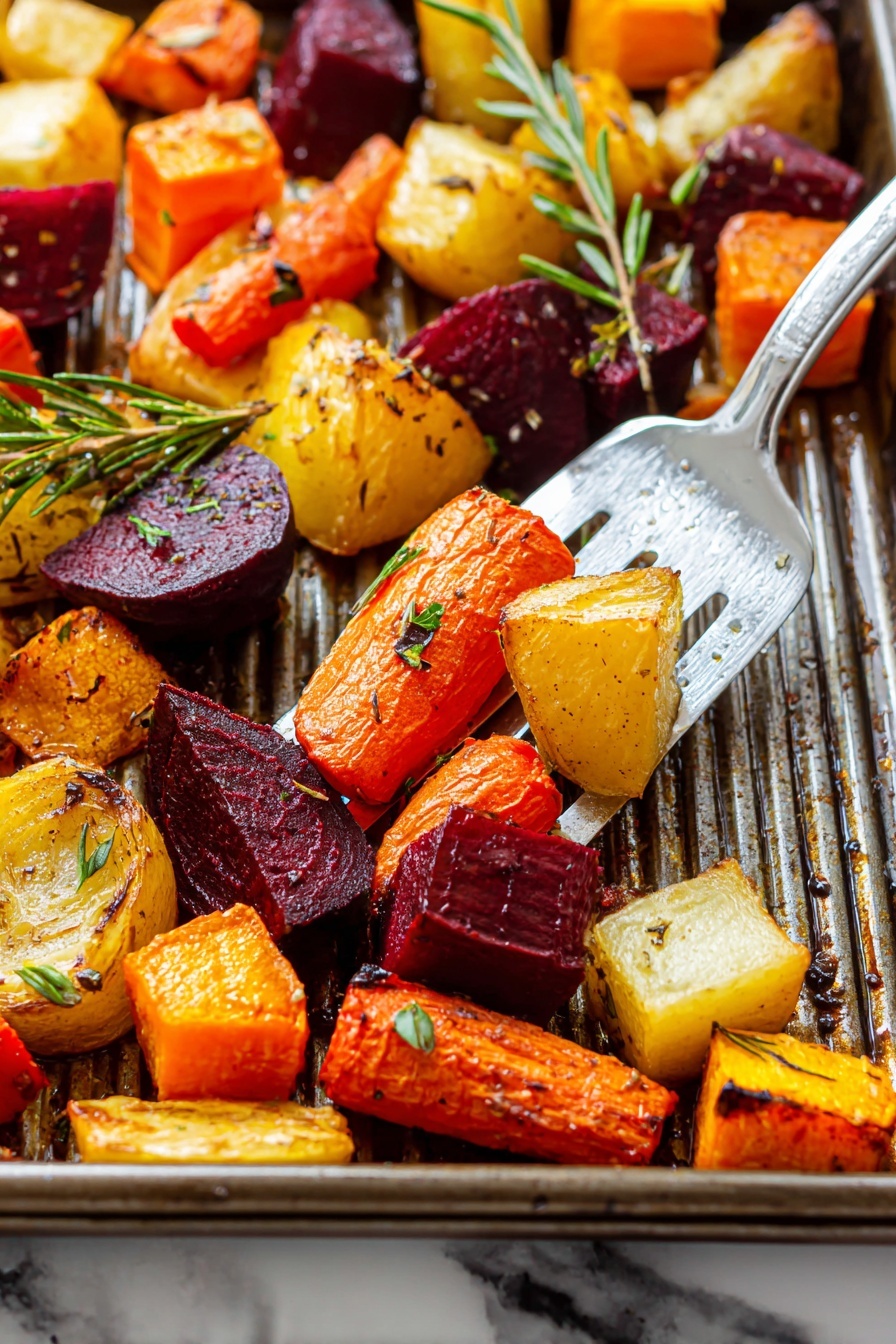
Roasted Root Vegetables Recipe
If you’re craving a side dish that’s both cozy and bursting with flavor, you’ve got to try this Roasted Root Vegetables Recipe. It’s the perfect way to bring warmth and earthiness to your table with minimal fuss. Trust me, once you get that golden caramelization and fragrant herbs going, you won’t want to serve anything else alongside your main dish.
Why This Recipe Works
- Balanced Flavors: The natural sweetness of carrots and beets meets the savory herbs and garlic for a harmonious taste.
- Simple Prep: Minimal chopping and seasoning, but maximum flavor development through roasting.
- Versatile Side: Perfect alongside weeknight dinners, holiday meals, or even meal prep for the week.
- Texture Contrast: Tender yet caramelized veggies with crispy edges that make every bite satisfying.

Ingredients & Why They Work
Each root vegetable in this recipe brings something special to the table, creating a medley that’s bursting with earthy sweetness and savory aromas. When shopping, look for firm, fresh roots without wrinkles or blemishes to ensure the best texture and flavor when roasted.
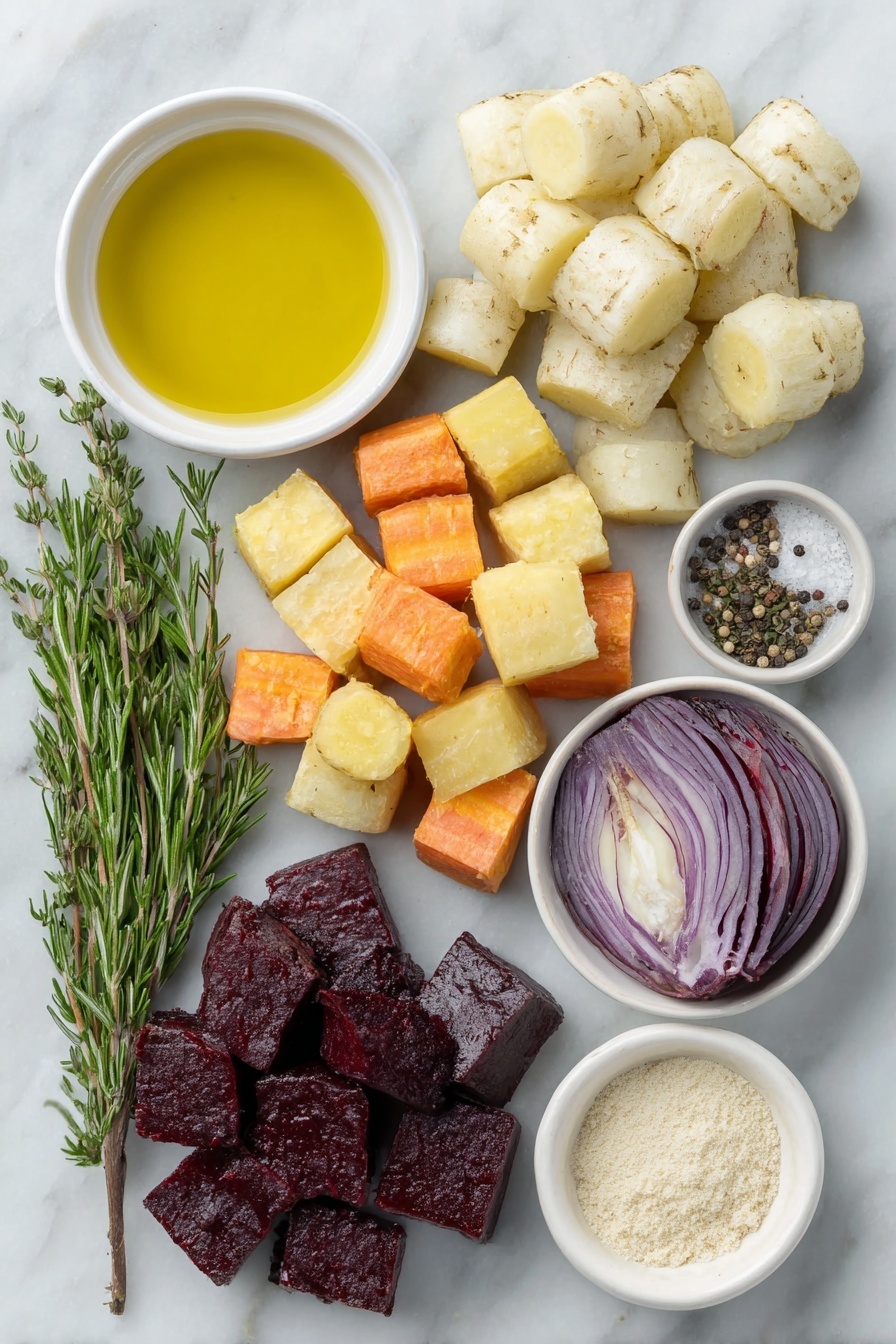
- Carrots: They add a natural sweetness and a nice pop of color; peeling helps the flavor shine and allows seasonings to penetrate.
- Parsnips: Slightly nutty and sweet, they complement the carrots and soften nicely when roasted.
- Beets: Their vibrant color and earthy flavor make the dish visually stunning and add depth.
- Sweet potato: Brings creaminess and subtle sweetness that contrasts beautifully with the sharper notes from the onion and herbs.
- Red onion: Adds a slight pungency and caramelizes fabulously, balancing the sweetness of the other roots.
- Olive oil: Helps everything roast evenly and develop that coveted golden crust.
- Fresh rosemary and thyme: These herbs infuse the veggies with a fragrant, savory note that perfume the entire dish.
- Garlic powder: Provides a mild, deeply savory base flavor without overpowering the sweet vegetables.
- Sea salt and black pepper: Essential for rounding out all flavors and enhancing the natural sweetness and earthiness.
Tweak to Your Taste
I love customizing this Roasted Root Vegetables Recipe depending on what’s in my fridge or what flavors I’m craving. Don’t hesitate to play around with herbs, spices, and even swap veggies to suit your mood or season.
- Variation: Sometimes I swap rosemary for sage or toss in some smoked paprika for a subtle smoky undertone that pairs amazingly with the natural sweetness.
- Dietary tweak: You can add a drizzle of balsamic glaze after roasting for a sweet tang that makes this dish feel extra special without adding any sugar.
- Seasonal swap: During colder months, I add diced rutabaga or turnips; in spring, baby carrots and fingerling potatoes work beautifully.
Step-by-Step: How I Make Roasted Root Vegetables Recipe
Step 1: Preheat & Prep Your Oven
Always start by preheating your oven to 425°F (218°C). A hot oven is key to getting those beautifully caramelized edges that bring out the depth of flavor. While that’s heating up, prep your vegetables by peeling and cutting them as recommended—don’t worry about perfect uniformity, but try to keep pieces roughly the same size so they roast evenly.
Step 2: Toss with Oil and Herbs
Place your chopped veggies into a large bowl, then drizzle with olive oil. Sprinkle on your fresh rosemary, thyme, garlic powder, salt, and black pepper. I like to use my hands to toss everything thoroughly, making sure every piece gets great coverage. This little hands-on step really helps in getting the best roast.
Step 3: Spread and Roast
Arrange the vegetables in a single layer on your baking sheet; overcrowding can cause steaming instead of roasting, so use a large sheet or two if needed. Roast for about 25 minutes, turning once halfway through to ensure even cooking and caramelization.
Step 4: Optional Broil for Extra Browning
If you like your vegetables with even more color and crunch, move your baking sheet about 6 inches away from the broiler and broil for 3-5 minutes. Keep a close eye so nothing burns – I find this step really amps up the flavor and texture.
Pro Tips for Making Roasted Root Vegetables Recipe
- Cut Evenly: Try to keep your vegetable pieces close in size to ensure even cooking and avoid some pieces burning while others remain underdone.
- Don’t Overcrowd: Give the veggies space on the baking sheet so they roast properly instead of steaming and getting soggy.
- Use Fresh Herbs: Fresh rosemary and thyme bring a brighter, more vibrant flavor compared to dried, and they hold up well during roasting.
- Broil with Care: When broiling to brown, stay close to avoid burning; those last few minutes make a big difference in texture and flavor.
How to Serve Roasted Root Vegetables Recipe
Garnishes
For garnishes, I love adding a sprinkle of fresh chopped parsley or a handful of toasted pecans for crunch and color contrast. A light drizzle of good quality balsamic vinegar or a squeeze of lemon juice right before serving brightens the dish wonderfully.
Side Dishes
This roasted root veggies recipe pairs beautifully with roasted chicken, grilled steak, or pan-seared fish. It also makes a hearty plant-based meal when tossed with quinoa or alongside a fresh green salad.
Creative Ways to Present
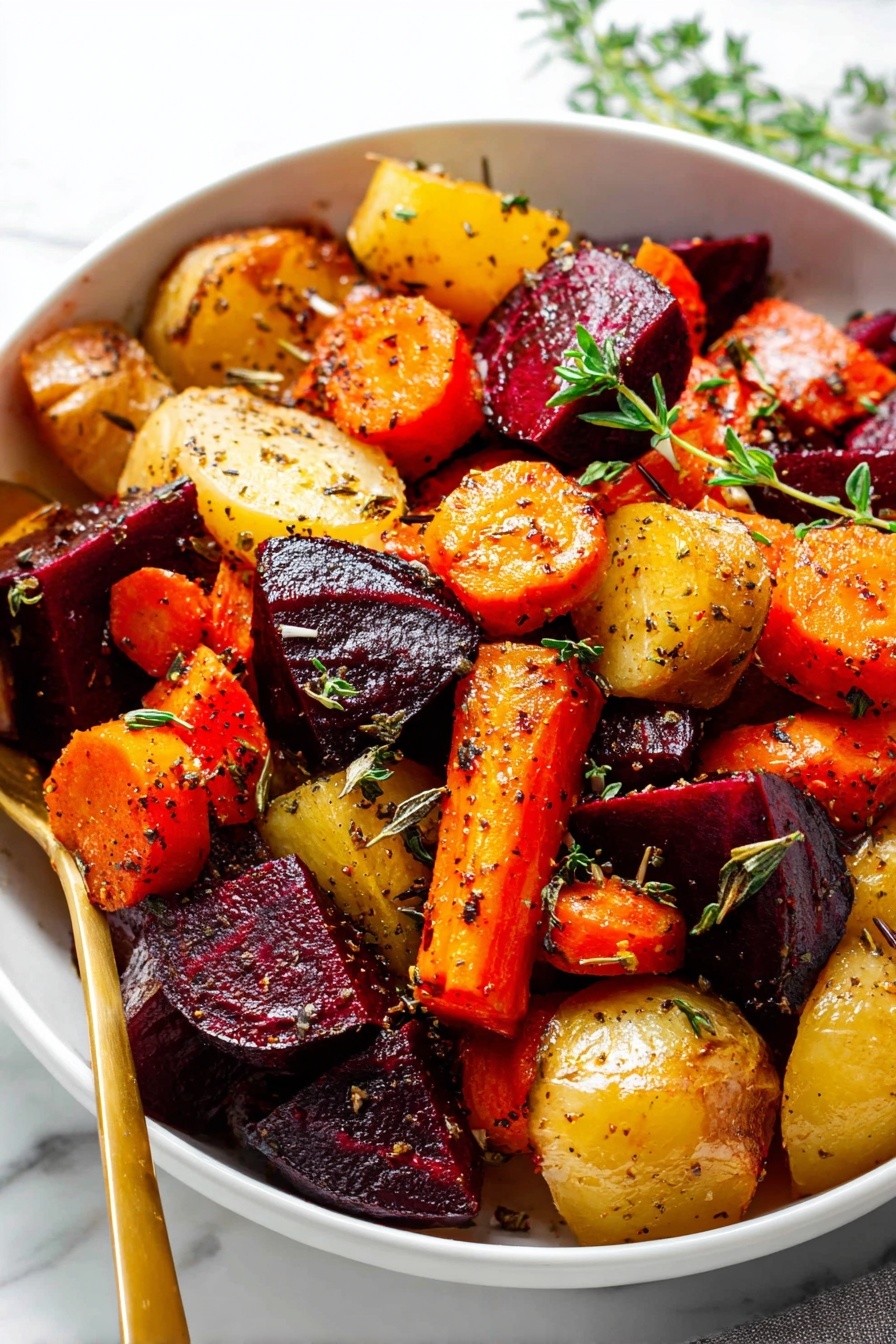
For special occasions, I’ve layered the roasted root vegetables on a rustic wooden board alongside slices of crusty bread and cheese for a vibrant vegetable platter. Alternatively, serving them in pretty bowls garnished with colorful herbs can really impress your guests while keeping things casual.
Make Ahead and Storage
Storing Leftovers
I store leftover roasted root vegetables in an airtight container in the fridge for up to 4 days. They keep their flavor really well and make quick lunches or sides during busy weeks.
Freezing
Freezing is possible, but keep in mind the texture softens a bit upon thawing. I usually freeze in meal-sized portions in freezer-safe bags and use them in soups or stews rather than eating them straight.
Reheating
Reheat roasted root vegetables in a 375°F oven for about 10-15 minutes to get the edges crispy again. Avoid microwaving if you want to preserve that lovely texture.
FAQs
-
Can I use frozen root vegetables for this recipe?
While fresh veggies are ideal for roasting, you can use frozen root vegetables in a pinch. Just be aware that frozen veggies tend to release more moisture, so spread them out well on the baking sheet and possibly increase the roasting time slightly to get a good caramelization.
-
How do I make sure the vegetables cook evenly?
Cut your vegetables into similarly sized pieces—about 1 inch cubes or similar thickness for slices—and don’t crowd the pan. Also, toss them halfway through cooking to ensure even exposure to the heat.
-
What if I don’t have fresh herbs?
You can substitute dried herbs if fresh aren’t available. Use about one-third the quantity since dried herbs are more concentrated. Adding them early ensures they have time to infuse the veggies.
-
Can I add other vegetables to this Roasted Root Vegetables Recipe?
Absolutely! Feel free to add things like sweet potatoes, rutabagas, turnips, or even some diced celery root. Just adjust your roasting time based on the density of the added veggies.
Final Thoughts
This Roasted Root Vegetables Recipe holds a special place in my kitchen because it’s so easy to prepare but tastes like you spent all day creating something special. The sweetness, the herbs, that little bit of char—it all comes together perfectly every time. I hope you give it a try and find it as comforting and versatile as I do. Get ready to impress your family or just treat yourself to a deliciously wholesome side that feels like a big, cozy hug on a plate.
Print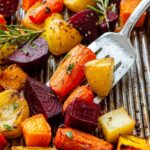
Roasted Root Vegetables Recipe
- Prep Time: 10 minutes
- Cook Time: 25 minutes
- Total Time: 35 minutes
- Yield: 6 servings
- Category: Side Dish
- Method: Baking
- Cuisine: American
- Diet: Vegetarian
Description
Deliciously caramelized roasted root vegetables featuring carrots, parsnips, beets, sweet potatoes, and red onion, seasoned with fresh rosemary, thyme, garlic powder, sea salt, and black pepper. Perfect as a comforting side dish or a healthy main for vegetarian meals.
Ingredients
Vegetables
- 5 medium carrots (~6 oz; peeled and sliced 1/2″ thick)
- 4 medium parsnips (~11 oz; peeled and sliced 1/2″ thick, then cut larger pieces into halves or quarters)
- 2 medium beets (~8 oz; peeled and cut into 1-inch cubes)
- 1 large sweet potato (~12 oz; peeled and cut into 1-inch cubes)
- 1 medium red onion (~6 oz; peeled and cut into 1.5-inch pieces, layers separated)
Seasonings and Oil
- 1/4 cup olive oil
- 1 tbsp fresh rosemary (chopped)
- 1 tbsp fresh thyme
- 3/4 tsp garlic powder
- 1 tsp sea salt
- 1/4 tsp black pepper
Instructions
- Preheat Oven: Preheat your oven to 425 degrees Fahrenheit (218 degrees Celsius) to prepare for roasting the vegetables.
- Prepare Vegetables: Combine the peeled and chopped carrots, parsnips, beets, sweet potato, and red onion in a large bowl.
- Add Seasonings and Oil: Drizzle the olive oil over the vegetables. Sprinkle fresh rosemary, thyme, garlic powder, sea salt, and black pepper. Toss everything together thoroughly to coat the veggies evenly.
- Arrange on Baking Sheet: Spread the vegetables in a single layer on a large baking sheet. If the surface is not non-stick, lightly spray with cooking spray or brush with olive oil first to prevent sticking.
- Roast the Vegetables: Place the baking sheet in the oven and roast for about 25 minutes until the vegetables are soft and caramelized.
- Optional Broiling Step: For extra browning, move the pan approximately 6 inches under the broiler and broil for 3-5 minutes until the vegetables are nicely browned.
Notes
- Cut vegetables uniformly to ensure even roasting.
- Use fresh herbs for the best flavor; dried herbs can be substituted but reduce the quantity by half.
- Allow vegetables to roast in a single layer to maximize caramelization.
- Keep an eye on vegetables during broiling to prevent burning.
- Leftover roasted vegetables can be refrigerated for up to 3 days and reheated.
Nutrition
- Serving Size: 1 cup
- Calories: 150 kcal
- Sugar: 7 g
- Sodium: 300 mg
- Fat: 7 g
- Saturated Fat: 1 g
- Unsaturated Fat: 6 g
- Trans Fat: 0 g
- Carbohydrates: 20 g
- Fiber: 4 g
- Protein: 2 g
- Cholesterol: 0 mg