Korean Beef Sesame Noodles Recipe
Oh, if you’re anything like me and love noodles with a punch of flavor, you’re going to flip for this Korean Beef Sesame Noodles Recipe. It’s packed with savory, sweet, and spicy notes that come together so beautifully in just 25 minutes flat—perfect whether you’re rushing through a weeknight or just craving something seriously tasty. Stick with me, and I’ll show you how to nail this dish at home, no fuss, just big flavor!
Why This Recipe Works
- Balanced Sauce: The combo of garlic, ginger, honey, and gochujang creates a sauce that’s perfectly sweet, tangy, and just spicy enough.
- Quick Stir-Fry: Using brown rice noodles and fresh veggies makes for a fast cook time without skimping on texture and color.
- Versatile Protein: Thinly sliced flank steak (or chicken if you prefer) cooks quickly, soaking up all those flavors perfectly.
- Fresh Finishes: Toasted sesame seeds and fresh basil bring a nutty crunch and bright herbal punch that elevate the dish.

Ingredients & Why They Work
Every ingredient in this Korean Beef Sesame Noodles Recipe plays its part to bring balance and depth. Here’s why I pick what I do, plus a few tips for shopping and prepping so your dish turns out spot-on.

- Garlic: Fresh cloves add that sharp, aromatic base essential for Korean flavors—never use powdered here!
- Fresh Ginger: Adds warmth and zing, balancing the sweetness and heat beautifully.
- Tamari or Soy Sauce: Tamari is my go-to for gluten-free and a richer, less salty taste, but soy works great too.
- Honey: Sweetens and softens the chili heat, giving the sauce that irresistible glaze.
- Rice Vinegar: Brings acidity that brightens and lifts the whole dish.
- Gochujang (Korean chili paste): The secret weapon—adds spicy, savory depth. You’ll want to taste and adjust depending on your heat level.
- Toasted Sesame Oil: Just a little adds that unmistakeable nutty aroma and richness.
- Brown Rice Noodles: They hold sauce well and have a great chew without being mushy—Cook them exactly as the package says!
- Mixed Stir Fry Vegetables: I like crunchy carrots, snap peas, and bell peppers for color and texture—feel free to mix your favorites.
- Shallots: Softer and sweeter than onions, they caramelize nicely when cooked, adding complexity.
- Flank Steak (or Chicken): Slice thinly so it cooks fast and gets those flavorful seared edges.
- Toasted Sesame Seeds: A simple way to boost texture and toasty flavor at the finish.
- Fresh Basil: Adds a surprising herbal freshness you’ll want to add right at the end.
Tweak to Your Taste
This Korean Beef Sesame Noodles Recipe is super flexible. I love playing with it depending on what’s in my fridge or my mood—don’t be afraid to make it your own!
- Swap the Protein: I’ve tried this with thin-sliced chicken breast and even tofu for a vegetarian twist. The sauce holds up beautifully either way.
- Level Up the Heat: If you really crave spice, add extra gochujang or a sprinkle of red pepper flakes—just be cautious if you want it kid-friendly.
- Add Crunch: Toasted peanuts or crushed cashews on top add fantastic texture and nuttiness.
- Boost the Veggies: Feel free to toss in mushrooms, shredded cabbage, or baby spinach to bulk it up.
Step-by-Step: How I Make Korean Beef Sesame Noodles Recipe
Step 1: Make the Sauce
This is where the magic starts. Combine your chopped garlic, ginger, tamari or soy, honey, rice vinegar, gochujang, and toasted sesame oil in a jar or bowl. Give it a good shake or whisk until everything’s nicely blended. I like to taste at this point—adjust the honey or gochujang if you want it sweeter or spicier. Trust me, this sauce carries the whole dish, so get it just right!
Step 2: Cook the Noodles
Follow the package directions for your brown rice noodles exactly—usually boiling them for a few minutes is enough. Once cooked, drain and rinse under cold water to stop the cooking and prevent sticking. I always toss them with a little sesame oil here to keep them nice and loose.
Step 3: Stir-Fry the Veggies
Heat 1 tablespoon of sesame oil in a large skillet over high heat. Toss in your mixed veggies and cook until they soften but still have a nice crunch—about 2-3 minutes. Then, stir in about 2 tablespoons of the sauce to coat the veggies and pull them all together. Once they’re perfect, scoop them out and set aside.
Step 4: Cook Shallots and Beef
In the same skillet, add another tablespoon of sesame oil, then toss in the sliced shallots. Cook them gently for about 2 minutes until they soften deeply and get a little sweetness. Next, add the sliced flank steak—leave it untouched for 2 minutes so it sears nicely, then toss it around to cook through. Pour in the remaining sauce and simmer briefly (just a minute) so the meat absorbs that fantastic flavor.
Step 5: Bring It All Together
Now stir in the noodles and the cooked veggies. Toss everything together for 2-3 minutes over medium heat so the sauce coats the noodles and all those ingredients mingle perfectly. Turn off the heat, then fold in your fresh basil and toasted sesame seeds. This last step adds brightness and crunch you definitely don’t want to skip!
Pro Tips for Making Korean Beef Sesame Noodles Recipe
- Don’t Overcook Noodles: Brown rice noodles can get mushy fast, so timing is everything—rinse with cold water right after draining.
- Thinly Slice Meat: It cooks quickly and absorbs sauce better. I find freezing the meat slightly beforehand makes slicing thin much easier.
- Taste as You Go: The sauce can be adjusted before cooking—more honey if you want sweetness, extra gochujang for heat.
- Use Fresh Basil at the End: Cooking it down kills the aroma and bright flavor, so add it just before serving.
How to Serve Korean Beef Sesame Noodles Recipe

Garnishes
I love topping this dish with a sprinkle of extra toasted sesame seeds and a few more fresh basil leaves—some folks swear by chopped scallions or even a drizzle of extra toasted sesame oil. These little touches add freshness and texture and make the dish look pretty irresistible.
Side Dishes
I usually pair this with a simple cucumber salad dressed lightly with rice vinegar and sesame oil—it cuts the richness and balances the spice. Steamed edamame or even some quick kimchi work wonders on the side if you want to lean into those Korean flavors.
Creative Ways to Present
For a casual dinner party, I’ve plated this dish in shallow bowls with extra basil and some thinly sliced red chili for color and pop. Alternatively, you can serve in lettuce wraps for a finger-food vibe—kids and adults alike enjoy this hands-on approach!
Make Ahead and Storage
Storing Leftovers
If you have leftovers (and trust me, you might!), store them in an airtight container in the fridge. The noodles soak up more sauce overnight, which actually makes for a tastier second meal—just keep the fresh basil separate if you can and add when reheating.
Freezing
I don’t recommend freezing this one with the noodles since brown rice noodles can get mushy and grainy after thawing. But if you want, freeze the sauce separately and fresh-cooked meat for easier weeknight assembly.
Reheating
Reheat leftovers gently on the stovetop or microwave, tossing with a splash of water or soy sauce to loosen the noodles. Add fresh basil and toasted sesame seeds after reheating to refresh the flavors and textures.
FAQs
-
Can I make Korean Beef Sesame Noodles Recipe gluten-free?
Absolutely! Use tamari instead of regular soy sauce and double-check your gochujang brand to ensure it doesn’t contain gluten. Also, brown rice noodles are naturally gluten-free, making this dish easy to adapt.
-
What if I don’t have gochujang?
If you can’t find gochujang, mix a bit of chili paste or sriracha with a touch of miso paste as a substitute. It won’t be exactly the same, but you’ll keep that spicy, savory depth in the sauce.
-
Can I use different noodles?
Yes! While I love brown rice noodles for their texture and health benefits, you can swap in soba, udon, or even spaghetti if needed. Just adjust cooking times accordingly and rinse to stop cooking.
-
Is this recipe spicy?
The heat level depends on how much gochujang you add. I recommend starting with 2 tablespoons and then tasting the sauce; you can always add more if you like it hotter. The honey also helps balance the spice nicely.
Final Thoughts
This Korean Beef Sesame Noodles Recipe has become one of my ultimate weeknight favorites because it strikes that perfect balance between satisfying comfort food and fresh, vibrant flavors. The fact that it comes together in under 30 minutes means you get way more time to enjoy your meal and less time stuck in the kitchen. Give it a try—you’ll love how approachable yet delicious this dish is. And trust me, once you make it, it’ll become a regular in your dinner rotation too!
Print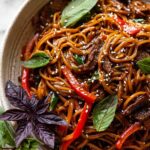
Korean Beef Sesame Noodles Recipe
- Prep Time: 15 minutes
- Cook Time: 10 minutes
- Total Time: 25 minutes
- Yield: 4 servings
- Category: Main Course
- Method: Stovetop
- Cuisine: Korean
Description
A quick and flavorful 20-minute Korean Beef Sesame Noodles recipe featuring tender flank steak, mixed stir fry vegetables, and a savory, spicy sauce made with garlic, ginger, tamari, honey, rice vinegar, and Gochujang. Perfect for an easy dinner packed with bold Korean flavors.
Ingredients
Sauce
- 4 cloves garlic chopped
- 1 tablespoon chopped fresh ginger
- 1/2 cup tamari or soy sauce
- 1/4 cup honey
- 2 tablespoons rice vinegar
- 3 tablespoons Gochujang (Korean chili paste)
- 1 tablespoon toasted sesame oil
Stir Fry
- 8 ounces brown rice noodles
- 2 tablespoons sesame oil
- 3 cups mixed stir fry vegetables
- 3 shallots, sliced
- 1 pound flank steak or chicken breast, sliced thin
- 1/4 cup toasted sesame seeds
- 1/2 cup fresh basil
Instructions
- Make the sauce: Combine all sauce ingredients in a glass jar. Shake or whisk thoroughly to blend the flavors well.
- Prepare noodles: Cook the brown rice noodles according to package directions. Drain and rinse under cold water to stop cooking and prevent sticking.
- Cook vegetables: Heat 1 tablespoon sesame oil in a large skillet over high heat. Add mixed stir fry vegetables and sauté until wilted, about 2-3 minutes. Stir in 2 tablespoons of the prepared sauce until veggies are coated, then remove from pan.
- Sear shallots and beef: In the same skillet, add 1 tablespoon sesame oil. Add sliced shallots and cook for 2 minutes until deeply softened. Add flank steak and cook without stirring for 2 minutes to sear. Toss meat, pour in remaining sauce, and simmer for 1 minute.
- Combine all: Stir in the cooked noodles and vegetables into the skillet. Cook for 2-3 minutes, stirring until noodles are evenly coated with sauce.
- Finish and serve: Remove from heat, then stir in fresh basil and toasted sesame seeds. Serve immediately, garnished with extra fresh basil if desired.
Notes
- Use tamari for a gluten-free option; regular soy sauce can be substituted otherwise.
- You can swap flank steak with chicken breast or tofu for different protein choices.
- If you prefer less spice, reduce the amount of Gochujang.
- To save time, prepare the sauce in advance and refrigerate.
- Brown rice noodles give a nuttier flavor and gluten-free option; regular noodles can also be used.
Nutrition
- Serving Size: 1 serving
- Calories: 450 kcal
- Sugar: 12 g
- Sodium: 800 mg
- Fat: 15 g
- Saturated Fat: 3 g
- Unsaturated Fat: 12 g
- Trans Fat: 0 g
- Carbohydrates: 45 g
- Fiber: 5 g
- Protein: 30 g
- Cholesterol: 70 mg