Basque Cheesecake Recipe
If you’ve been on the hunt for a perfectly creamy, delightfully caramelized dessert that’s easy to nail every time, you’re going to love this. My Basque Cheesecake Recipe is one of those magical treats that feels fancy but is surprisingly simple. It’s got this rustic charm with a perfectly burnt top and a gooey, creamy center that just melts in your mouth. Whether you’re baking it for a crowd or just sneaking a slice for yourself, this cheesecake always hits the spot—and the best part? You don’t even need to fuss with a crust!
Why This Recipe Works
- No Crust Needed: This Basque cheesecake bakes with just the batter, so no fiddly steps with crust making.
- The Perfect Burnt Top: High-heat baking creates that signature caramelized surface full of flavor.
- Silky Texture: Gentle mixing preserves creaminess without air bubbles or a souffle-like texture.
- Flexible and Forgiving: This recipe is super adaptable and still amazing if you tweak sugar levels or cream types.

Ingredients & Why They Work
The ingredients in this Basque Cheesecake Recipe are delightfully simple but combine for maximum impact. Each one is essential—cream cheese for richness, eggs for structure, and heavy cream for that silky mouthfeel. The vanilla and salt round out the flavor, and just a bit of flour keeps everything perfectly set without being cakey. When shopping, always look for full-fat cream cheese and heavy cream for the best results. Trust me, the full-fat versions make a huge difference here.

- Cream Cheese: Full-fat and room temp is key for smooth mixing and rich flavor.
- Granulated Sugar: Balances the tang of the cream cheese and helps with caramelization.
- Large Eggs: Room temperature eggs blend better and support structure without toughness.
- Heavy Cream: Adds silkiness and moisture; farm fresh double cream, if you can find it, is a game-changer.
- Vanilla Extract: Gives subtle warmth and depth to the flavor.
- Salt: Enhances all the flavors and balances sweetness.
- All-Purpose Flour: Just a bit to help stabilize without making it cakey.
Tweak to Your Taste
One of the things I love about the Basque Cheesecake Recipe is how easy it is to personalize. Whether you prefer it a little less sweet or want to amp up that sugary kick, it’s forgiving. I often play with adding a hint of citrus zest or swapping vanilla for almond extract to surprise my family. Don’t be afraid to make it your own—you might find a twist that becomes your signature.
- Less Sweet Version: I’ve dropped sugar down to 1¼ cups on occasion, and it still tastes incredible, especially if you like balancing sweet with a fruit topping.
- Extra Vanilla: Doubling the vanilla extract amps up the aroma in the kitchen and adds extra warmth.
- Flavored Variations: Try stirring in a spoonful of espresso powder or a tablespoon of citrus zest for a fun spin.
- Cream Swap: If you find double cream locally, swapping out regular heavy cream totally elevates the silky texture.
Step-by-Step: How I Make Basque Cheesecake Recipe
Step 1: Prep Your Pan Like a Pro
Start by preheating your oven to 425°F and lining a 9 or 10-inch springform pan with parchment paper. Here’s a little insider tip: criss-cross two sheets of parchment and scrunch them up under running water, then dry before fitting—it makes them much more pliable and easier to shape with those lovely signature peaks above the rim. This high side will catch the batter as it expands and keep those iconic rustic edges intact.
Step 2: Whip the Cream Cheese and Sugar
Pop your softened cream cheese into a large mixing bowl or stand mixer fitted with the whisk attachment. Whip it for about two minutes—this step is what guarantees a super smooth base, no lumps in sight. Next, slowly add in the sugar on medium speed. Keep whipping for another two minutes until silky. Don’t forget to scrape down the sides so nothing gets stuck!
Step 3: Add Eggs Slowly, Then Cream and Flavor
Add your eggs one at a time on low speed. This slower method is crucial—if you rush, the mixture can get bubbly which ruins that smooth Basque texture I’m sure you want. After all eggs are in, pour in the heavy cream, vanilla extract, and salt still mixing on low until it’s all incorporated. Finally, sift in the flour and mix just briefly—about 20 seconds tops. This little bit of flour keeps it from feeling like a souffle and rather more creamy and dense.
Step 4: Bake to Perfection
Transfer that luscious batter into your prepared pan and place it on a rimmed baking sheet (trust me, the cheesecake can bubble over a little, and this saves your oven). Bake it in the middle rack for 50 to 65 minutes. You’ll see it puff up and develop a beautiful golden to dark brown top—that’s the trademark burnt crust you want. The center should still jiggle slightly when you gently shake the pan; it will firm up as it cools and chills.
Step 5: Cooling and Chilling Are Important
Once baked, move the cheesecake (still in the pan!) to a wire rack to cool completely at room temperature. Then pop it into the fridge to chill for at least 8 hours, ideally overnight. I promise, this step is totally worth the wait—the flavors meld beautifully, and the texture becomes sublime. Remove it from the fridge about an hour or two before serving so it can come closer to room temp and regain that creamy softness we love.
Pro Tips for Making Basque Cheesecake Recipe
- Room Temperature Ingredients: Make sure all ingredients, especially cream cheese and eggs, are at room temperature for smoothest batter.
- Low Mixing Speed: Mixing gently keeps the batter dense and creamy rather than airy and souffle-like.
- Don’t Remove Early: Wait until fully cooled before removing from pan to keep the cheesecake intact and prevent cracking.
- Use a Hot Knife to Slice: Run your knife blade under hot water and dry it before each cut for smooth, clean slices without sticking.
How to Serve Basque Cheesecake Recipe

Garnishes
I typically serve this Basque Cheesecake Recipe just as it is, because that rich burnt top is perfection alone. But sometimes I like to add a dollop of fresh whipped cream or a spoonful of berry compote—especially mixed berries or cherries—to cut through the richness with some tartness. A drizzle of honey or a sprinkle of toasted nuts also adds a lovely textural contrast.
Side Dishes
To round things out, I’ve found that light, fresh sides work best—think fresh fruit salad, a vibrant citrus salad, or even a simple green tea or espresso to balance the richness. If it’s a party, small bites like almond biscotti or crunchy cookies pair beautifully.
Creative Ways to Present
For a special occasion, I like to present the Basque cheesecake on a rustic wooden board with fresh herbs like mint scattered around for a pop of color and aroma. Another fun idea is to serve individual mini cheesecakes baked in ramekins for a charming and elegant touch. A light dusting of powdered sugar through a stencil can add a playful pattern across the caramelized surface.
Make Ahead and Storage
Storing Leftovers
If you’re lucky enough to have leftovers, store the cheesecake in the fridge tightly wrapped or in an airtight container. I wrap mine with plastic wrap pressed directly on the surface to keep it from drying out, then cover with foil for extra protection. It stays fresh and creamy for up to one week—though in my house, it rarely lasts that long!
Freezing
Freezing works surprisingly well for this Basque Cheesecake Recipe. Just cool it completely, then wrap it tightly in plastic wrap followed by a layer of foil. I like to place it on a sturdy cake board or cutting board inside the freezer to keep it stable. It’ll keep for up to three months. Thaw it overnight in the fridge for best results.
Reheating
When you want to enjoy leftovers, I recommend removing the cheesecake from the fridge about an hour (or two) before serving so it softens up nicely. If you want it warmer, a gentle 10-15 second zap in the microwave can bring back that luscious softness, but watch it carefully to prevent melting.
FAQs
-
What makes Basque cheesecake different from regular cheesecake?
Basque cheesecake is known for its burnt, caramelized top and crustless nature. Unlike traditional cheesecakes that usually have a crust and a smooth pale surface, Basque cheesecake is baked at a higher temperature which gives it a deeper flavor and a rustic, imperfect look.
-
Can I use low-fat cream cheese or cream in this Basque Cheesecake Recipe?
I recommend sticking to full-fat cream cheese and heavy cream for the richest texture and the best results. Using lower fat alternatives can compromise the cheesecake’s silky texture and flavor.
-
Why does the cheesecake need to be baked at a high temperature?
Baking at a high temperature creates that iconic burnt top with a custardy center. The high heat caramelizes the sugars on top quickly while setting the cheesecake just enough inside for the perfect texture.
-
How do I prevent cracks in my Basque cheesecake?
This cheesecake is meant to have a rustic, imperfect look, so small cracks are okay. To prevent major cracks, avoid overmixing the batter and don’t remove it from the pan until it’s completely cooled. Gentle mixing and slow cooling help a lot.
-
Can I make this Basque Cheesecake recipe dairy-free?
Dairy-free versions are tricky because cream cheese and heavy cream are essential for the creamy texture. However, there are dairy-free cream cheese substitutes and plant-based creams that can work, but expect some changes in taste and texture.
Final Thoughts
Honestly, this Basque Cheesecake Recipe has become a staple in my kitchen because it looks impressive but is so straightforward. I find myself baking it whenever I want to treat friends or family without the fuss of complicated desserts. The light burnt edges paired with the creamy center are something that keeps everyone coming back for more. Give it a try—you might just discover your new favorite cheesecake too!
Print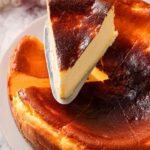
Basque Cheesecake Recipe
- Prep Time: 15 minutes
- Cook Time: 1 hour
- Total Time: 11 hours 15 minutes
- Yield: 12 servings
- Category: Dessert
- Method: Baking
- Cuisine: Spanish
Description
This Basque Cheesecake features a rich, creamy, and rustic burnt top with a silky interior. Its minimal ingredients and straightforward preparation make it an effortlessly impressive dessert perfect for gatherings and parties.
Ingredients
Cheesecake Batter
- 32 ounces cream cheese, room temperature and full-fat only
- 1½ cups granulated sugar
- 5 large eggs, room temperature
- 1½ cups heavy cream, room temperature
- 1 tablespoon vanilla extract
- 1 teaspoon salt
- ⅓ cup all-purpose flour, sifted
Instructions
- Preheat Oven and Prepare Pan: Preheat the oven to 425°F. Line a 9 or 10-inch springform pan with a criss-crossed double layer of parchment paper, wetting, scrunching, and drying the parchment to make it easier to handle. Allow the parchment to extend about 2 inches above the pan’s edge. Set aside.
- Whip Cream Cheese: In a large bowl or stand mixer fitted with a whisk attachment, whip 32 ounces of room temperature cream cheese on medium speed for 2 minutes until smooth and creamy.
- Add Sugar: Gradually add 1½ cups granulated sugar while mixing on medium speed. Continue mixing for about 2 minutes until fully combined and smooth, scraping down the sides if needed to ensure no lumps remain.
- Incorporate Eggs: Add 5 large eggs one at a time on low speed, mixing gently to incorporate each egg fully before adding the next. Ensure only a little yellow from the previous egg remains before adding the next one to avoid overmixing.
- Add Cream, Vanilla, and Salt: With the mixer on low speed, add 1½ cups heavy cream, 1 tablespoon vanilla extract, and 1 teaspoon salt. Mix until fully incorporated, continuing to avoid overmixing for a smooth texture.
- Add Flour: Sift ⅓ cup all-purpose flour into the batter and mix on low speed for about 20 seconds to combine evenly without creating air bubbles.
- Pour and Bake: Pour the prepared batter into the lined springform pan. Place the pan on a rimmed baking sheet on the middle oven rack and bake for 65 minutes until the top is a deep golden brown and the center is still slightly jiggly.
- Cool the Cheesecake: Remove the cheesecake from the oven and transfer it (in the pan) to a wire rack to cool to room temperature. The cheesecake will deflate slightly as it cools, which is normal.
- Chill: Transfer the cheesecake (still in the pan) to the refrigerator and chill for at least 8 hours or preferably overnight to allow the center to set completely.
- Serve: Remove the cheesecake from the refrigerator 1 to 2 hours before serving to bring to room temperature. Use the parchment edges to lift the cheesecake off the pan base. For clean slices, warm a large chef’s knife under hot water, wipe dry, and slice the cheesecake.
- Optional Toppings: Serve plain or with fruit compote or your favorite cheesecake topping for added flavor.
Notes
- Use full-fat, room temperature cream cheese for the best texture and flavor.
- Farm fresh double cream can replace regular heavy cream for an even richer result.
- Do not remove the cheesecake from the pan until fully cooled to avoid cracking or breaking.
- The cheesecake is best served at room temperature but should be stored in the refrigerator otherwise.
- Store leftovers in the refrigerator for up to 1 week or freeze for up to 3 months, wrapped tightly in plastic wrap and aluminum foil.
- Be mindful when mixing to avoid overwhipping eggs and cream, which can create unwanted air bubbles and alter texture.
- The rustic, slightly burnt top and imperfect look are characteristic features of this cheesecake, making it charming and party-ready.
- Sugar can be adjusted between 1¼ cups to 2 cups depending on desired sweetness.
Nutrition
- Serving Size: 1 slice
- Calories: 450 kcal
- Sugar: 30 g
- Sodium: 350 mg
- Fat: 36 g
- Saturated Fat: 22 g
- Unsaturated Fat: 10 g
- Trans Fat: 0.5 g
- Carbohydrates: 25 g
- Fiber: 0.5 g
- Protein: 7 g
- Cholesterol: 140 mg